

New York federal courts decide many food-label cases at the pleading stage by asking whether a reasonable shopper, reading the whole label, would be misled. A front-of-package phrase is read alongside the ingredient list and the rest of the package, and complaints often fail when those confirm the claim or show that the plaintiff’s reading goes beyond it.
The argument has limits. Courts ask whether the front label is merely ambiguous, in which case the ingredient list can clear it up, or unambiguously misleading, in which case it cannot. Some courts also treat the reasonable-consumer question as a fact issue not suited to dismissal. This post explains where those lines fall and what recent decisions suggest for companies selling in New York.
What the standard asks in New York
A claim under New York General Business Law §§ 349 and 350 requires consumer-oriented conduct that is materially misleading and that injures the plaintiff. The Second Circuit asks whether the conduct was likely to mislead a reasonable consumer acting reasonably under the circumstances, meaning a significant portion of the general consuming public, or of targeted consumers, could be misled.
Two features of that test help defendants. First, the primary evidence in a labeling case is the label itself. Second, the court reads the label as a whole, including disclaimers and qualifying language, rather than isolating the phrase the plaintiff objects to.
Because the test is objective, courts can measure a plaintiff’s reading against the label at the pleading stage, and a reading that is idiosyncratic or farfetched does not state a claim. Courts differ, though, on how readily they will do so. Some decisions treat what a reasonable consumer would think as ordinarily a question of fact.
The test also looks at shoppers, not regulators. Courts have said ordinary consumers are not presumed to know federal labeling rules, so FDA compliance does not by itself answer a deception claim.
The consumer protection statutes in New Jersey, Pennsylvania, and Maryland ask for different things on reliance, injury, and fees. A separate post compares the four.
Why the ingredient list matters
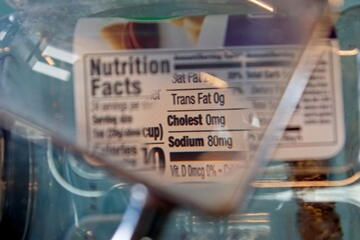
The ingredient list and Nutrition Facts panel give a court a fixed text to hold against the front-of-package claim. When they confirm the claim, or show that the plaintiff’s reading goes beyond what the label says, New York courts have dismissed cases early. Examples:
Decision | Court and date | Label claim | Why it was dismissed |
Bates v. Abbott Laboratories, No. 24-919-cv, 2025 WL 65668 (summary order), affirming 727 F. Supp. 3d 194 | 2d Cir., Jan. 10, 2025 | Health and nutrition statements on Ensure drinks; plaintiff said the added sugar made them misleading | None of the statements mentioned sugar, and the Nutrition Facts panel disclosed the sugar content, so any ambiguity was cured |
Warren v. Coca-Cola Co., 670 F. Supp. 3d 72 (Seibel, J.) | S.D.N.Y. 2023 | “Margarita” hard seltzer; plaintiff said it implied tequila | The front label did not suggest tequila, and even if it had been ambiguous, the ingredient panel (no tequila) would have cured it |
Vazquez v. Walmart, Inc., 704 F. Supp. 3d 417 | S.D.N.Y. 2023 | “Oats and honey” granola bar | Even if the packaging left room to think honey predominated, the ingredient list set consumers straight; the list was the only unambiguous statement of how much honey the bar contained |
Seljak v. Pervine Foods LLC, 2023 WL 2354976 (NRB) | S.D.N.Y., Mar. 3, 2023 | “FIT” on protein bars; plaintiffs said it implied “healthy” | “Healthy” did not appear on the package, the fat content was disclosed, and the dessert-style product names signaled an indulgent product |
Brown v. Kellogg Sales Co., 2022 WL 992627 | S.D.N.Y., Mar. 31, 2022 | Strawberry imagery and wording on a Kellogg product; plaintiff said the front omitted pears and apples named in the ingredient list | The court held the front label was not misleading and that Mantikas applies only where the front label is unambiguously misleading |
Beers v. Mars Wrigley Confectionery US, LLC, 2022 WL 493555 | S.D.N.Y., Feb. 17, 2022 | “With milk chocolate” on Dove ice cream bars; plaintiff objected to vegetable oils in the coating | The ingredient list confirmed the claim, the label had no “only” or “exclusively,” and shoppers expect a fat or oil in an ice cream coating |
In Bates, the Second Circuit also pointed to two December 2023 summary orders, Foster v. Whole Foods Market Group, Inc. and Baines v. Nature’s Bounty (NY), Inc., which reached the same result on the same reasoning.
The decisions share three features:
The front-of-package words did not say what the plaintiff claimed they said.
The ingredient list or Nutrition Facts panel was consistent with the front label.
The court considered what a shopper expects from that kind of product.
Where the argument fails
The ingredient list does not rescue a front label that is itself misleading. In Mantikas v. Kellogg Co., 910 F.3d 633 (2d Cir. 2018), the front of the Cheez-It box said “whole grain,” but the side panel showed enriched white flour as the main ingredient. The Second Circuit held that shoppers should not be expected to look past a misleading front claim to find the truth in the small print, because they expect the ingredient list to confirm what the front says.
The Second Circuit applied the same reasoning in Venticinque v. Back to Nature Foods Co., No. 23-1236-cv, 2024 WL 3385136 (2d Cir. July 12, 2024) (summary order), vacating a dismissal. The front label said “organic whole wheat flour” while the predominant flour was organic unbleached enriched wheat flour. The court called the claim “strikingly similar” to the one in Mantikas and held that the front label was “not merely ambiguous,” so the defendant’s argument that the side panel could clarify any ambiguity failed.
A 2025 decision shows the argument can fail even without a large, bold claim. In Basile v. General Mills Sales, Inc., No. 24 Civ. 9329 (LLS), 2025 WL 2452349 (S.D.N.Y. Aug. 26, 2025), the plaintiff said the front of a Gardetto’s Garlic Rye Chips bag (the word “Rye” set off by lines, the phrase “Special Request,” dark brown chips, and visible garlic seasoning) suggested that rye was a significant part of the flour. The court acknowledged that the label lacked the “large, bold-faced” claim in Mantikas and Venticinque, but denied dismissal, finding that the chips “more closely parallel the grain-based products in recent Second Circuit jurisprudence than the flavored products in other cases” and that the plaintiff plausibly alleged a misleading label. The court also found a price-premium injury plausibly alleged. The ingredient list did not end the case at the pleading stage.
District courts have applied Mantikas to featured-ingredient claims that the ingredient list refutes. In Clemmons v. Upfield US Inc., 667 F. Supp. 3d 5 (S.D.N.Y. 2023), a plant butter labeled “Made With Olive Oil” and showing olives allegedly contained mostly palm and canola oil, with olive oil the smallest ingredient, and the court denied dismissal. Reyes v. Upfield US Inc., 694 F. Supp. 3d 408 (S.D.N.Y. 2023), reached the same result for “Made with Almond Oil,” and Brockington v. Dollar General Corp., 695 F. Supp. 3d 487 (S.D.N.Y. 2023), did so for “graham” and “made with real honey” claims on graham crackers. In each, the claim was about what the product contained, and the court would not let the ingredient list defeat it at the pleading stage.
The ingredient list is also a weaker cure for “natural” and “no artificial flavors” claims, because shoppers may not know which listed ingredients are synthetic. In Ward v. Pepperidge Farm, Inc., 773 F. Supp. 3d 10 (S.D.N.Y. 2025), the court denied dismissal where a label statement about artificial ingredients was challenged over the cracker’s citric acid, holding the plaintiff sufficiently alleged that citric acid was a preservative and was artificial, and rejecting a preemption defense. Cobovic v. Mars Petcare US, Inc., 793 F. Supp. 3d 438 (E.D.N.Y. 2025), denied dismissal over “natural” on cat food, reasoning that the ingredient list did not definitively resolve the ambiguity in how “natural” applied.
The line, as the Second Circuit’s summary orders in Bates, Foster, and Baines and the district courts draw it: when the front label is merely ambiguous, the ingredient list or Nutrition Facts panel can resolve it, and when the front label is unambiguously misleading, or the back contradicts it, nothing on the back cures it. Most disputes turn on which side of that line a particular front label falls.
Dismissal is also not guaranteed when the label is accurate. Courts describe the reasonable-consumer question as generally one of fact, as in Ward, Winans v. Ornua Foods N. Am. Inc., 731 F. Supp. 3d 422 (E.D.N.Y. 2024) (“pure Irish butter”), and Kominis v. Starbucks Corp., 692 F. Supp. 3d 236 (S.D.N.Y. 2023) (beverages named for fruit). They still dismiss when the plaintiff does not plausibly allege that the label is false, as in Brownell v. Starbucks Coffee Co., 681 F. Supp. 3d 27 (N.D.N.Y. 2023) (a “100%” ground coffee claim; plaintiff did not adequately allege heightened potassium).
Courts also differ on how to frame the pleading burden. Some require a defendant to extinguish the possibility that a reasonable consumer could be misled (Grossman v. Simply Nourish Pet Food Co., 516 F. Supp. 3d 261 (E.D.N.Y. 2021)), while Second Circuit summary orders ask whether a significant portion of the consuming public could be misled (Jessani v. Monini N. Am., Inc., 744 F. App’x 18 (2d Cir. 2018), and Axon v. Florida’s Natural Growers, Inc., 813 F. App’x 701 (2d Cir. 2020)).
What this means for labels and defense
Make the front claim true on its own. If it features an ingredient, check that the ingredient is predominant or that the wording does not suggest it is.
Watch the modifiers. Beers turned partly on the absence of words like “only” and “exclusively.” Without them, courts read a featured-ingredient claim more narrowly.
Compare front and back before launch. The ingredient list and Nutrition Facts panel should confirm the front claim, not undercut it.
Put the whole label before the court. In a defense, attach the complete package to the motion and argue from the label as a whole.
Pair the argument with others. Preemption, standing, and class certification arguments may apply alongside the reasonable-consumer argument.
Outcomes depend on the specific label, the court, and the claim. This is general information, not legal advice.
Frequently asked questions
Can we be sued even if our ingredient list is accurate?
Yes. An accurate list helps when it confirms the front label, but it does not cure a front claim that is itself misleading, as Mantikas shows.
When does the ingredient list help us?
When the front label is ambiguous and the list confirms or clarifies it. It does not help when the front label is unambiguously misleading, such as a featured-ingredient claim the list refutes.
What is the “reasonable consumer”?
It is an objective standard: an ordinary shopper acting reasonably under the circumstances, reading the label as a whole. A plaintiff’s personal or unusual reading does not set the test.
Can a court decide this at the start of the case?
Often, but not always. Bates and Beers were decided on motions to dismiss, while other New York decisions treat the question as one of fact. Whether it can be resolved early depends on the label and the claim.
Does the Nutrition Facts panel count the same way as the ingredient list?
In Bates, the Second Circuit treated accurate disclosure on the Nutrition Facts panel as clearing up ambiguity. Mantikas, by contrast, rejected reliance on either panel to correct a front claim that is misleading.
Does this apply outside New York?
Other states use their own statutes, elements, and case law, so the answer depends on where the case is filed.
Does FDA compliance answer a reasonable-consumer claim?
Not by itself. Courts have said ordinary shoppers are not presumed to know federal labeling rules. Federal preemption is a separate defense that can apply to some claims, depending on what the plaintiff says the label should have said.

